deepSI
Dynamical System Identification using python incorporating numerous powerful deep learning methods. (deepSI = deep System Identification)
Goals of deepSI
The goal of deepSI is to provide a platform for the development and use of (deep) dynamical system identification methods. Furthermore, the deepSI module (i.e. toolbox) is implemented such that anyone can use it without requiring deep expert knowledge in either system identification or machine learning. Lastly, the usage of deepSI is intuitive and often requiring effectively no more than 10 lines of code as seen in the example below.
Illustrative Example
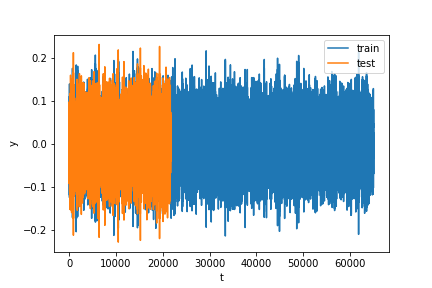
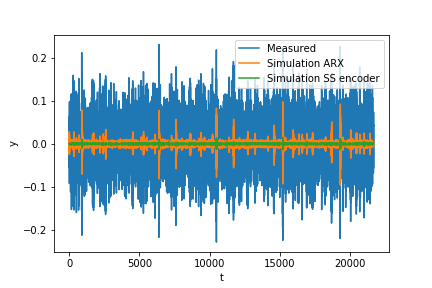
Main Features
- Numerous System Identification methods
Linear methods (e.g. ARX, Linear State Space)
Nonlinear methods (e.g. NARX, GP, SVM, Sub-space Encoder)
User defined identification methods
Direct access to most popular system identification datasets and benchmarks (e.g. nonlinearbenchmarks.org and DaISy
Numerous evaluation and analysis tools (e.g. RMS, NRMS, n-step NRMS)
Numerous predefined data generation systems (e.g. openAI gym, Wiener, Lorenz attractor, video output systems)
Being able to accommodate user defined data generation system with ease.
Featured Projects utilizing deepSI
Gerben Beintema, Roland Toth, Maarten Schoukens; Nonlinear State-Space Identification using Deep Encoder Networks; Submitted to l4dc 2021a; [Github Repository](https://github.com/GerbenBeintema/SS-encoder-WH-Silver), [Arxiv](https://arxiv.org/abs/2012.07721)
Gerben Beintema, Roland Toth, Maarten Schoukens; Nonlinear State-space Model Identification from Video Data using Deep Encoders; Submitted to SYSID 2021b; [Github repository](https://github.com/GerbenBeintema/SS-encoder-video), [Arxiv](https://arxiv.org/abs/2012.07721)
Contact
Feel free to contact me directly for any question or issues related to deepSI.
Main developer: PhD candidate Gerben Beintema at the TU/e. Control Systems. g.i.beintema@tue.nl
License
BSD 3-Clause License